When I was little, I created my own cabinets of curiosity; old letterpress trays in chests of drawers filled with shells and fossils, liberally mixed together with Kinder Egg toys and cracker charms; the free gifts in cereal packets; dolls house furniture and reproduction Roman coins from English Heritage gift shops (anything to delay a child’s full-blown rebellion on a culture trip).
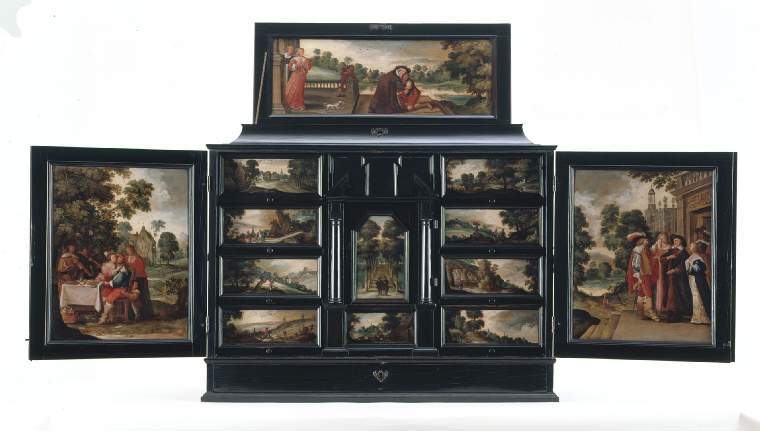
There is so much possibility held behind a cabinet door with a tiny keyhole. Treasure. Or possibly magic; The Minpins, The Indian in the Cupboard, (I never took to The Borrowers), The Box of Delights. The laws of physics, social systems, common sense, all could operate differently behind that wood veneer and intricate inlay of tortoiseshell and mother of pearl. Existence could be a lot better in that other realm, or a whole deal worse. A mirror world, uncanny replicas, distorted visions. Open the door and should you have the folly to reach inside, you might get sucked into a stratosphere where everything is recognisable yet warped and strange.
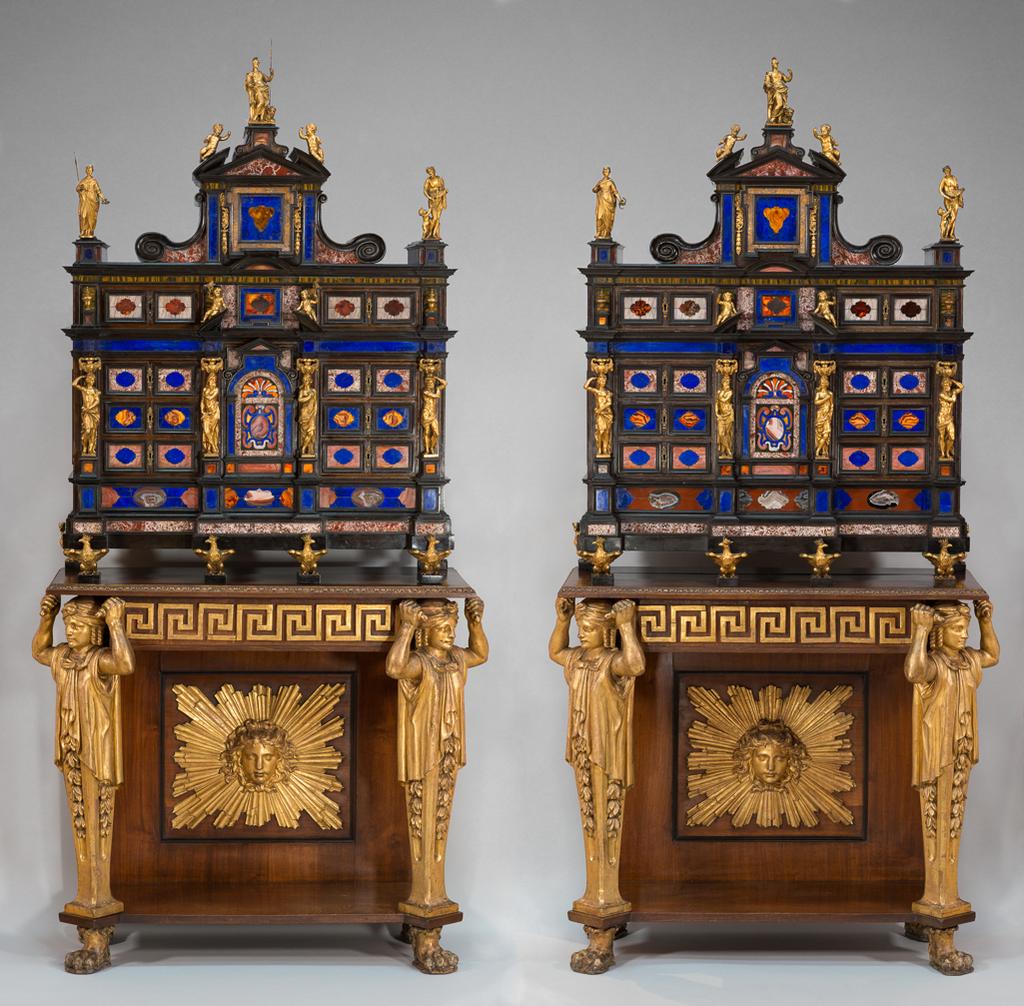
Curiosity cabinets were built for prized collections and the desire in me to amass objects is strong (even if my own collecting is less Grand Tour, more Weird and Rubbish). I have helped clear out both sets of grandparent’s homes after their deaths, and can attest to there being a family interest in accumulation. Items are given value, not based on monetary worth, but on family connections however distant. Great Aunt so-and-so’s rather ugly, damaged and disliked side table is kept, despite an understanding that it would be refused by the local charity shop. Hard copies of long-forgotten texts in boxes; photographs of unknown ancestors; mothy rugs; unreadable collections of short stories which never-the-less have the name of a grandparents written on the fly leaf.
But undeniably, it is through this very accumulation and the resulting chaos that my own creativity lies. This midden becomes material for plunder, its seams running as deeply into the past as into the present. I will never be bored with these drawers to rummage through and can’t conceive a time when I will stop filling my own boxes, stop collecting, shaking and re-arranging.

There is a simple strategy:
I: Open the Drawer
II: Fill the Drawer
III: Place a piece of card over the Drawer
IV: Shake the Drawer (and if items are not fragile, do so with some vigour)
V: Replace the Drawer without looking.
VI: After a suitable stretch of time, say, a few hours or, better yet, a week, open the drawer and examine the contents carefully.
N.B. This is not foolproof, but is the only method I know for allowing magic to do its work.
 Lottie Stoddart
Leave a comment